Green hydrogen may not require the enormous volumes once projected by some industry forecasts, but reaching 100 million tonnes of green hydrogen could remain a crucial milestone in the development of a competitive global hydrogen market.
New forecasts from leading energy consultancies suggest the future hydrogen market may be smaller than many of the ambitious projections published several years ago, supporting a view long advocated by hydrogen analyst Carlos Bernuy-Lopez.
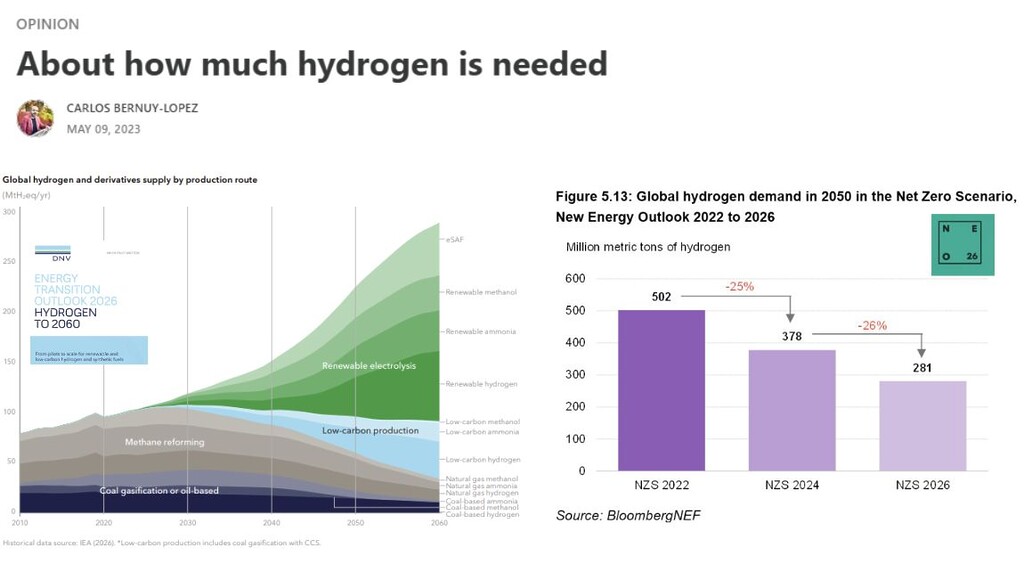
Bernuy-Lopez argues that a decarbonised global economy may ultimately require around 200 million tonnes of hydrogen annually by 2050, significantly below some of the more optimistic projections that emerged during the early years of the hydrogen sector.
Recent forecasts from DNV and BloombergNEF appear to be moving closer to this range. Both organisations project global hydrogen demand of roughly 300 million tonnes by mid-century, with DNV forecasting that around 200 million tonnes could come from green hydrogen.
While these projections remain somewhat higher than Bernuy-Lopez’s own estimates, they point to a hydrogen market that is measured in the hundreds of millions of tonnes rather than the far larger volumes often cited during the industry’s early growth phase.
For policymakers, investors and technology providers, the implications are significant. Even under more conservative scenarios, hydrogen remains a major global market and an essential tool for decarbonising hard-to-abate sectors such as steel, chemicals, shipping and aviation.
Against this backdrop, Bernuy-Lopez continues to argue that a global target of 100 million tonnes of green hydrogen production remains highly relevant. Reaching this milestone would require a massive expansion of renewable power generation, electrolyser deployment and supporting infrastructure, while helping to drive down costs through scale and industrial learning.
The challenge for the sector is now to accelerate deployment while continuing to improve electrolyser performance, reduce capital costs, increase efficiency and build the manufacturing capacity needed to support large-term growth.
Although the future hydrogen market may be smaller than some early forecasts suggested, it remains a critical component of global decarbonisation efforts and one of the most important long-term opportunities within the clean energy transition.
Source: Original LinkedIn post by Carlos Bernuy-Lopez. Readers can view the full post and join the discussion here