Clean hydrogen demand will develop at different speeds across industries as sectors vary significantly in their willingness to pay for low-carbon hydrogen, writes Carlos Bernuy-Lopez in an analysis of the IEA’s Global Hydrogen Review 2026. The findings suggest that cost competitiveness alone will not determine the pace of adoption, with targeted policy support remaining essential in many applications.
One of the most interesting chapters in the latest Global Hydrogen Review 2026 from the IEA is the one dedicated to cost acceptability. It reinforces something I have been insisting on for many years: it is essential to assess the levelized cost of hydrogen for each specific application and region rather than relying on generalised cost targets.
The report presents several insightful analyses showing how different policy measures could accelerate the deployment of clean hydrogen. As expected, the differences are substantial, both across regions (e.g. China, Europe and North America) and across industrial sectors.
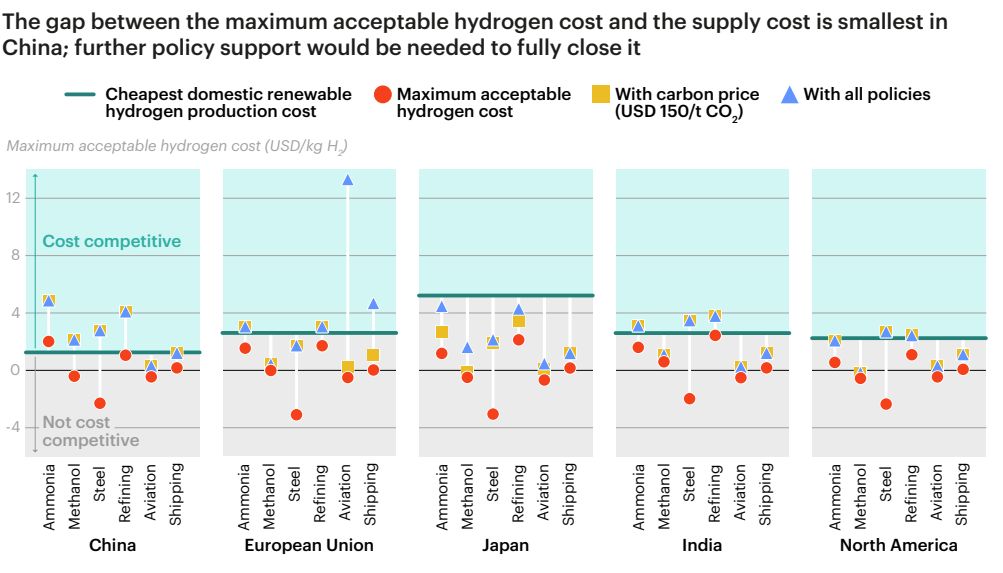
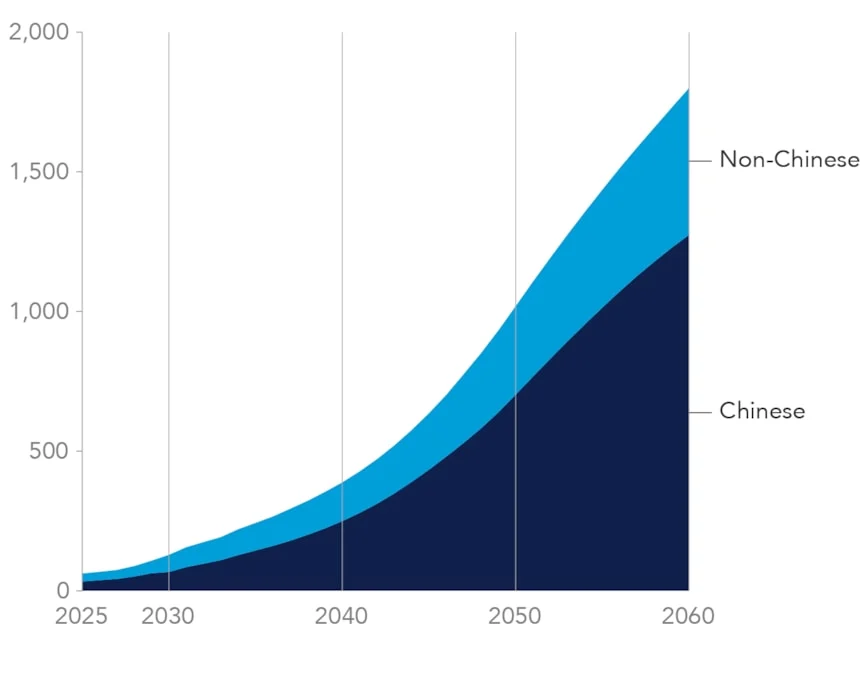
The figure below illustrates how a uniform carbon price would increase the maximum acceptable cost of clean hydrogen across different sectors. It also highlights why China is currently in a much stronger position to deploy renewable hydrogen at scale: its domestic production costs are already significantly lower than those of other regions.
Even so, the analysis suggests that a carbon price alone would not be sufficient to fully close the remaining gap, meaning that additional policy support will still be needed. In contrast, regions such as Japan would require considerably more ambitious policy measures because of their much higher renewable hydrogen production costs.
Another key takeaway from this chapter is the large variation in willingness to pay across sectors. Ammonia production and oil refining are already relatively close to the cost of renewable hydrogen, making them among the first sectors where large-scale adoption becomes economically feasible.
Steel production, on the other hand, still exhibits a negative cost acceptability, highlighting how challenging the business case remains. The report also shows how targeted policy support could significantly improve cost acceptability in sectors such as aviation and shipping, particularly in Europe, creating attractive early markets for clean hydrogen.
In conclusion, the hydrogen transition is not only about developing technologies capable of producing renewable hydrogen at competitive costs. We certainly need companies such as Electrogenos that aim to deliver green hydrogen below €3/kg without subsidies, but we also need well-designed policies that create demand where it matters most. The success of the hydrogen economy will depend on both sides of the equation: competitive supply and sufficient willingness to pay.
Source: Carlos Bernuy-Lopez (Linkedin), based on the IEA Global Hydrogen Review 2026.