The hydrogen project pipeline continues to show active movement, with early-stage projects advancing while the market filters less viable developments.
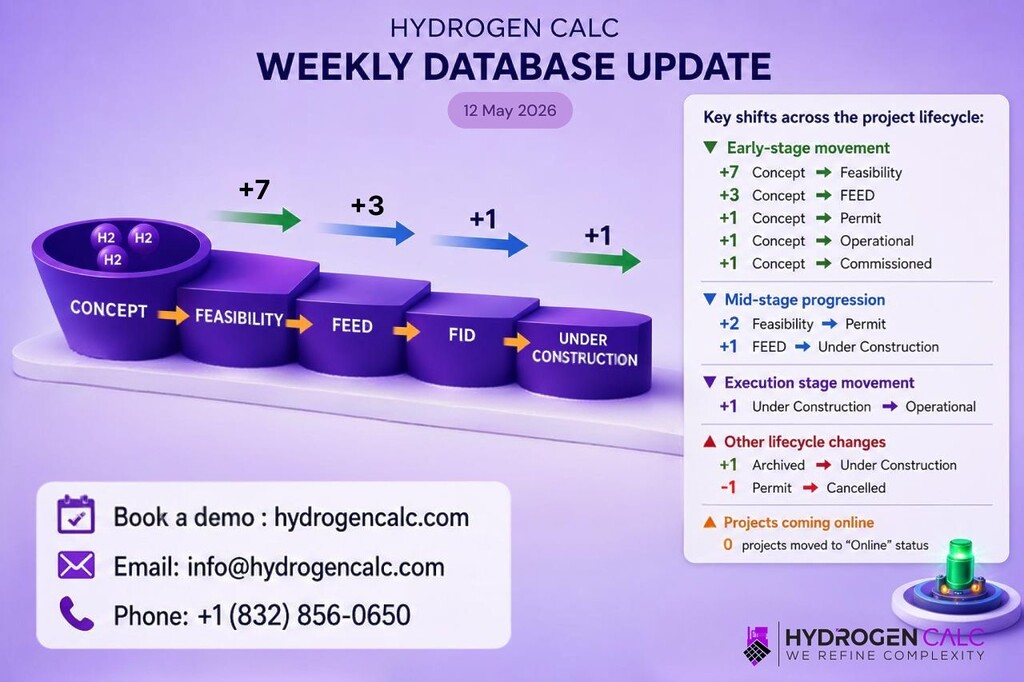
The latest weekly update from HydrogenCalc’s project database points to continued progress across the global hydrogen project lifecycle. This week’s movements show a particularly strong push from concept-stage projects into more developed phases, suggesting that early market activity remains active despite ongoing commercial and execution challenges.
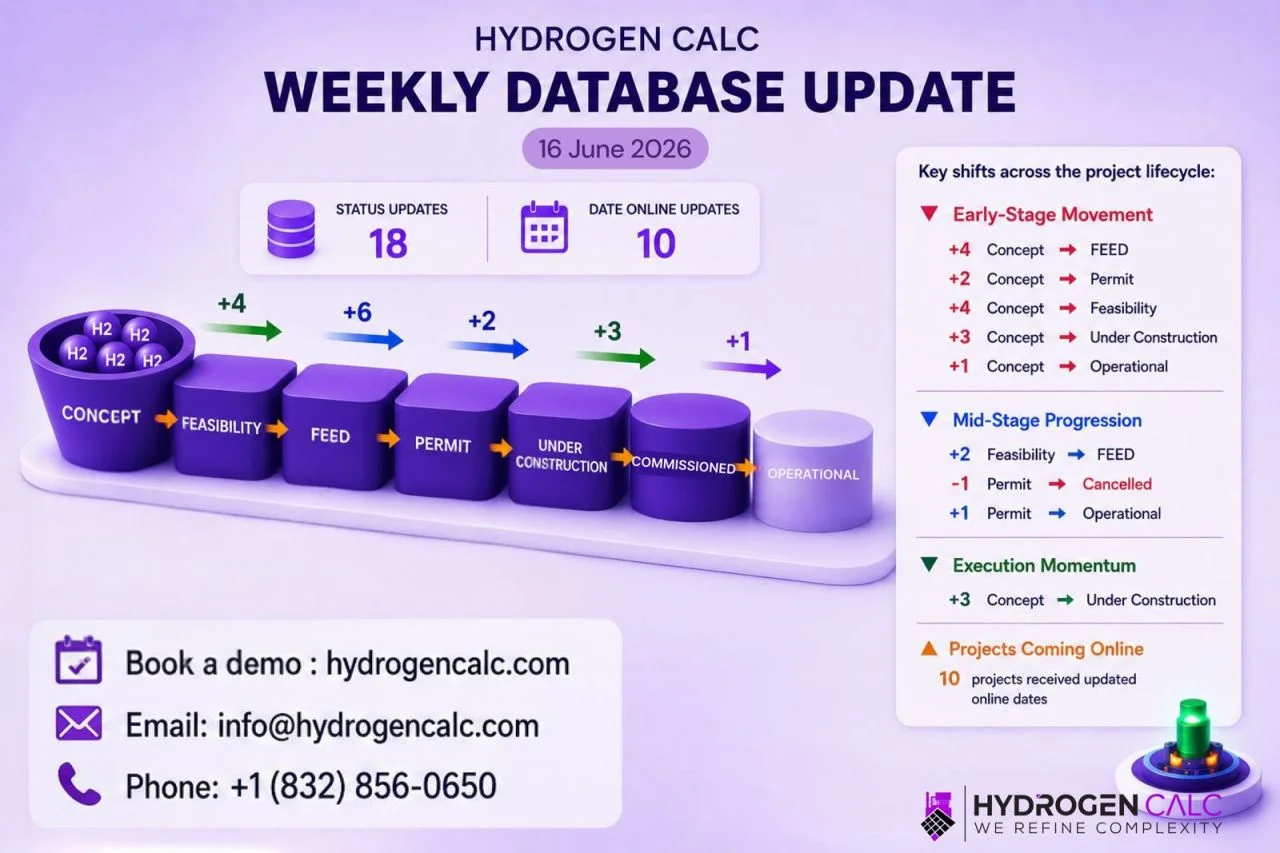
The most notable trend is the volume of projects moving out of the concept stage. Seven projects advanced from concept to feasibility, while three moved from concept to FEED. These transitions suggest that developers are continuing to test project economics, technical viability, offtake potential, and permitting pathways before committing to full execution.
There were also several signs of later-stage progress. Two projects moved from feasibility into permitting, while one FEED-stage project advanced into construction. Another project moved from under construction to operational status, showing that some developments are continuing to make the difficult transition from planning to delivery.
One of the more interesting changes this week was the movement of an archived project back into under construction. While a single project does not define a market trend, this type of transition highlights how project status can change as financing, policy support, infrastructure readiness, or commercial conditions improve.
At the same time, the cancellation of a permitted project reinforces the reality that hydrogen development remains selective. Not every project that advances through the pipeline will reach final delivery. Cost pressures, uncertain demand, permitting complexity, and financing challenges continue to shape which projects move forward and which are removed from the active pipeline.
Overall, this week’s HydrogenCalc update suggests a market that is still progressing, but not uniformly. Early-stage momentum remains visible, execution is continuing in select cases, and weaker or less viable developments are still being filtered out.
For hydrogen market participants, this makes project-level tracking increasingly important. Announcements alone do not provide a clear view of supply development. Stage movements, cancellations, restarts, and operational transitions offer a more accurate picture of where credible hydrogen supply may actually emerge.
Source: HydrogenCalc (LinkedIn)