Hydrogen taxis are gaining traction in urban mobility as Uber invests in French operator HysetCo, aiming to scale hydrogen-powered fleets in Paris and accelerate zero-emission ride-hailing.
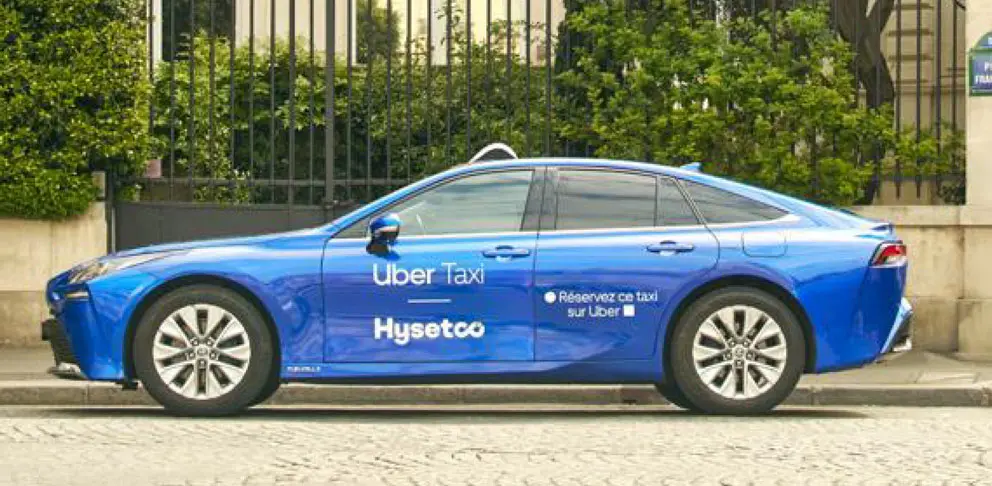
Uber has invested in French hydrogen mobility company HysetCo as part of a partnership to expand hydrogen-powered taxis and ride-hailing services in Paris.
The investment, structured as a convertible loan, will support HysetCo’s growth and strengthen Uber’s taxi offering in the French capital.
Under the agreement, Uber plans to integrate nearly 2,000 hydrogen taxis from HysetCo into its platform over the next five years, targeting premium and business ride segments.
By the end of 2026, hydrogen vehicles are expected to represent one in five cars eligible for Uber’s Business Taxi service in Paris, marking a significant step in scaling hydrogen mobility in dense urban environments.
HysetCo brings an integrated model combining vehicle leasing, maintenance, insurance and access to a dedicated hydrogen refuelling network operating 24/7. The company already has more than 800 hydrogen vehicles in operation and has logged over 90 million zero-emission kilometres since 2021.
The partnership also allows HysetCo drivers to access Uber’s platform and demand base, while Uber expands its zero-emission offering beyond battery-electric vehicles into hydrogen-powered fleets.
For Uber, the move strengthens its position in the taxi segment, particularly in the corporate travel market, while supporting its broader decarbonisation strategy.
For HysetCo, the deal provides scale, demand visibility and a major commercial partner to accelerate deployment of hydrogen vehicles in high-usage applications such as taxis and ride-hailing.
The partnership signals growing confidence in hydrogen as a viable solution for intensive urban mobility, where fast refuelling and high utilisation rates remain key advantages over battery-only alternatives.
Source: HysetCo