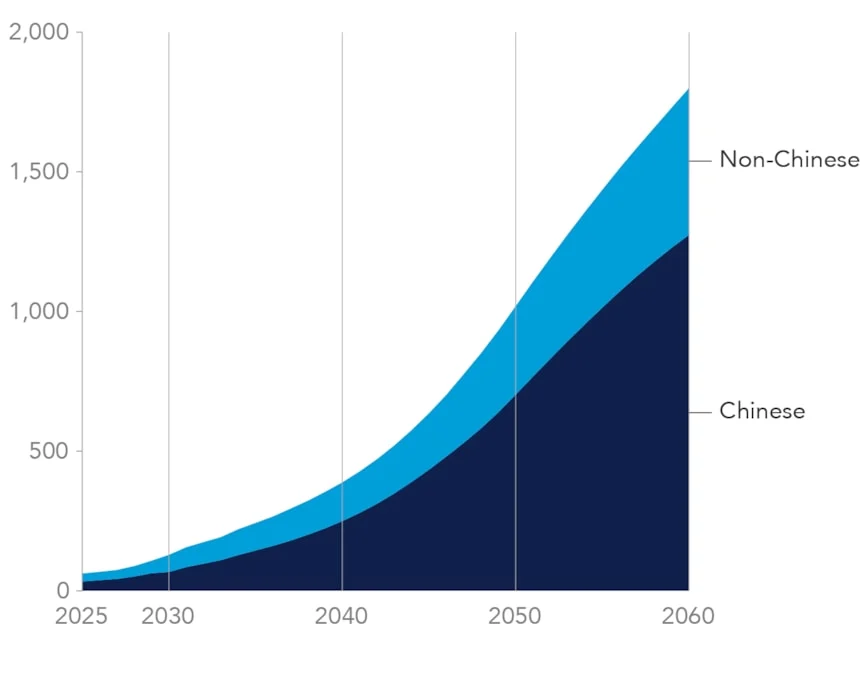
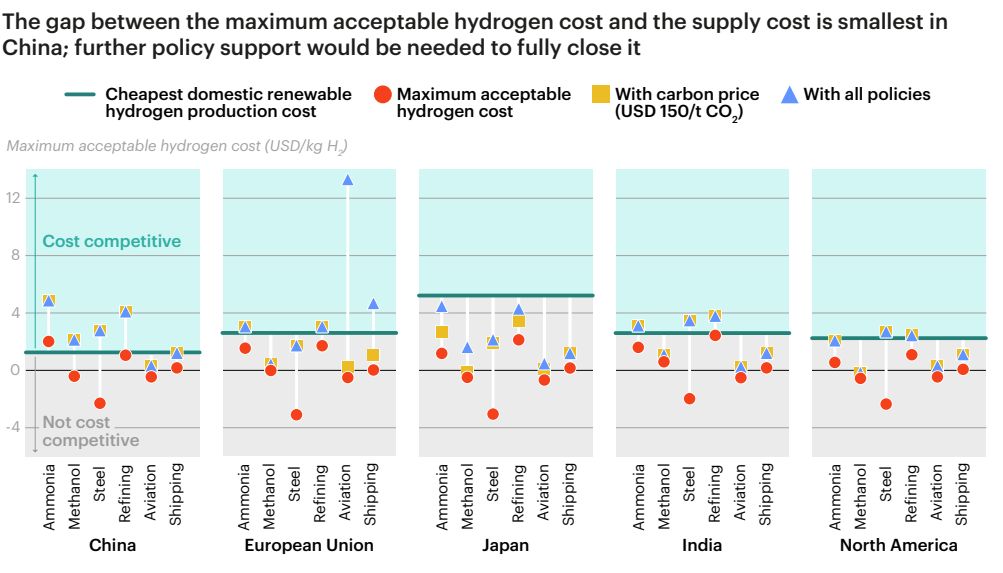
Green hydrogen cost is at the center of the energy transition debate, with China and Europe potentially holding the keys to breaking below €4/kg by 2030.
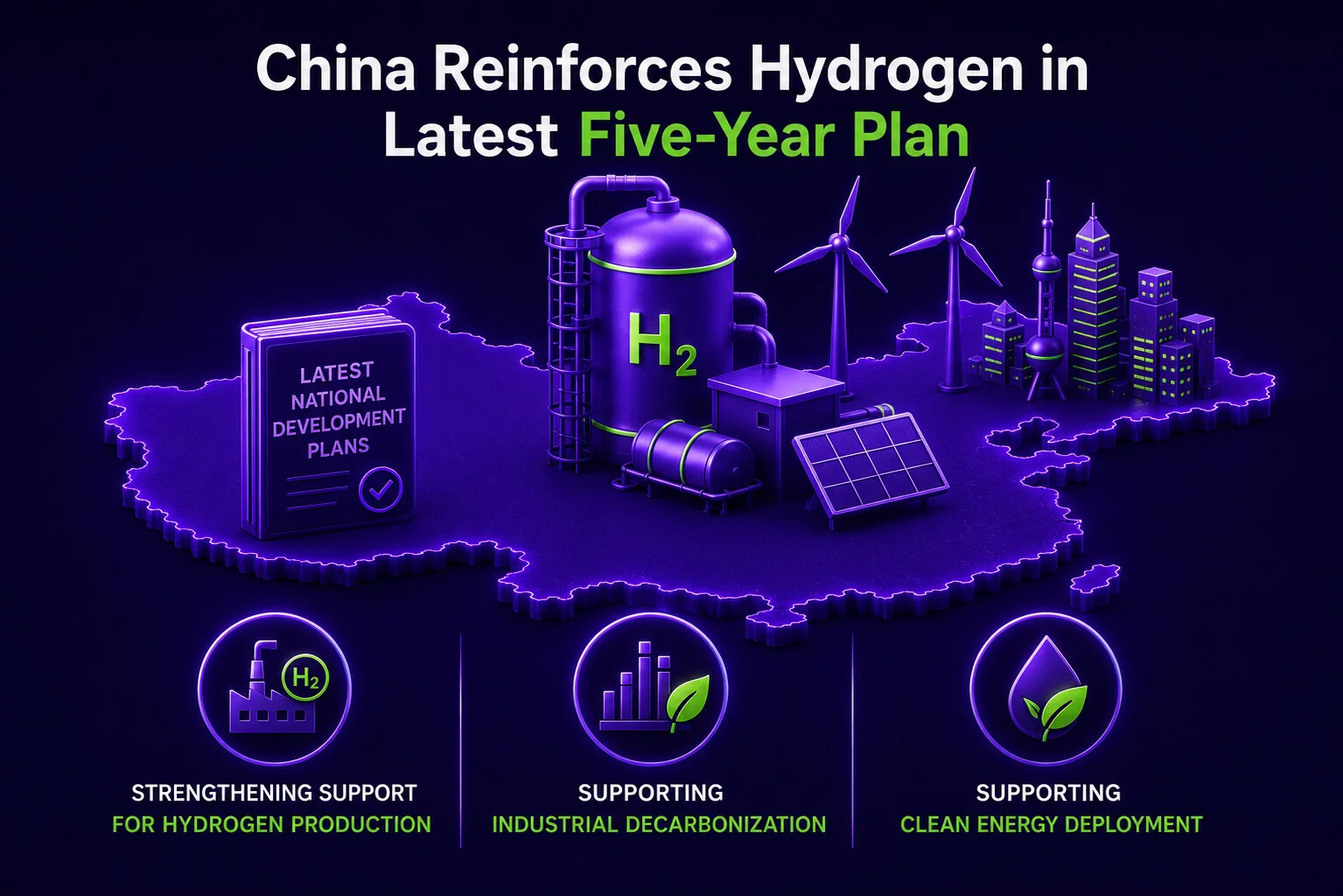
The global hydrogen market remains overwhelmingly fossil-based, and China sits at the heart of this reality. Producing roughly 30–35 million tonnes of hydrogen annually, China is by far the world’s largest producer. Yet more than 60% of this output is derived from coal, with a further ~20% coming from natural gas. In this sense, China reflects the global system—but with a heavier carbon footprint due to its coal dependency.
At the same time, the country is increasingly exposed to external risks. Despite its domestic coal resources, China relies on imports for around 40–45% of its natural gas consumption. This combination of high emissions and growing import dependency creates a structural vulnerability—one that green hydrogen could help address.
But green hydrogen is not just about replacing grey hydrogen molecules. Its real value lies in its role as a system enabler. Both China and Europe are already experiencing the side effects of rapid renewable deployment: curtailment, negative electricity prices, and grid congestion.
Converting excess renewable electricity into hydrogen offers a structural solution—absorbing surplus power, stabilising grids, and enabling further expansion of wind and solar capacity. In this context, hydrogen becomes the critical bridge between electrons and molecules.
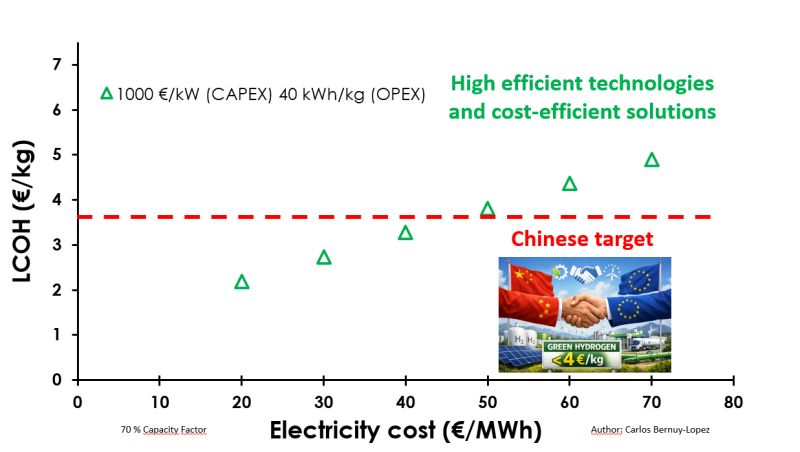
The challenge, however, is far from trivial. Achieving green hydrogen below €4/kg by 2030 is not simply a question of reducing capital expenditure. It is fundamentally about system efficiency and utilisation. Electricity prices below €60/MWh must be paired with high capacity factors—around 70%—to make the economics work.
This is difficult to achieve in practice. Every kilowatt-hour counts: stack efficiency, system integration, heat recovery, and operational flexibility will determine the winners. Without system-level efficiencies approaching or below 40 kWh per kilogram, even low-cost renewable power will struggle to deliver competitive hydrogen.
This is where the strategic interplay between China and Europe becomes critical. China has repeatedly demonstrated its ability to scale manufacturing rapidly and drive down costs across clean technologies—from solar panels to batteries.
Europe, by contrast, brings strengths in high-efficiency engineering, system integration, and advanced industrial processes, alongside strong policy support for green hydrogen deployment.
Reaching sub-€4/kg hydrogen will likely require a combination of both approaches: China’s industrial scale and cost discipline, and Europe’s technological depth and efficiency leadership.
There is, however, a strategic risk for Europe. If it fails to engage and position itself within this emerging ecosystem, China may once again set the pace—and the standards—for the global market. Recent history in clean technologies suggests how quickly leadership can consolidate.
The question, therefore, is no longer whether hydrogen will scale.
It is who will define the rules of the game.
Source: Carlos Bernuy-Lopez (LinkedIn)