Hydrogen market development needs to shift towards more realistic cost expectations, phased deployment strategies and long-term industrial scaling as the sector continues to face major economic and investment challenges despite strong long-term decarbonisation potential.
“We choose to go to the Moon in this decade and do the other things, not because they are easy, but because they are hard…” — John F. Kennedy (1962).
Recent decisions to delay or scale back parts of the hydrogen value chain highlight the economic pressures still facing the sector, particularly around green hydrogen and SOEC deployment.
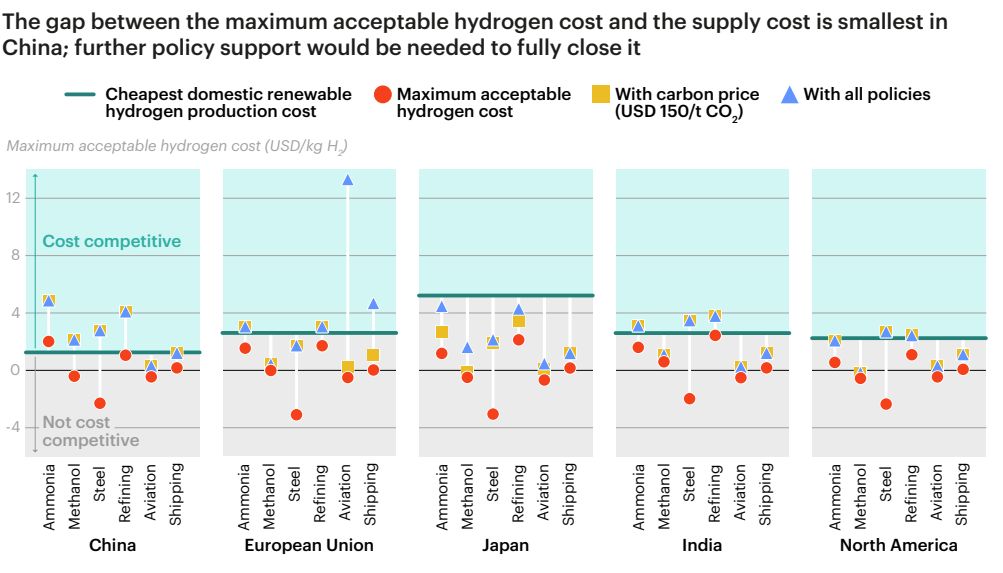
Many hydrogen-related projects continue to struggle to reach final investment decision (FID) because of the significant cost gap that still exists compared with fossil alternatives. This remains especially challenging for products such as ammonia, methanol and sustainable aviation fuel, where hydrogen production costs can still be two to three times higher than conventional pathways.
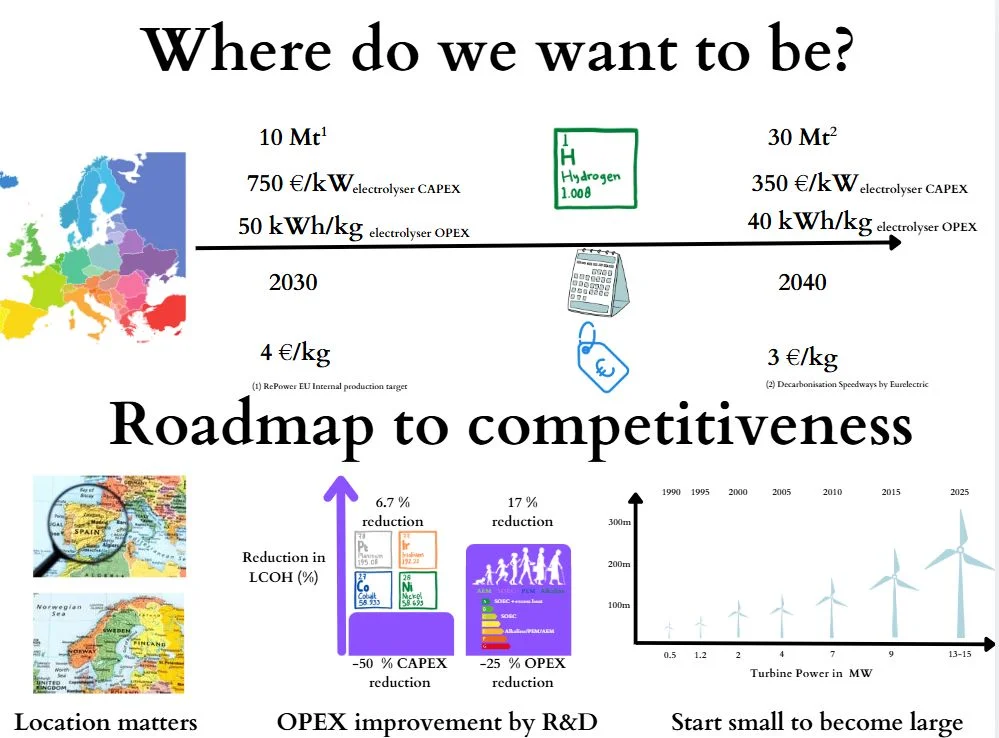
According to Carlos Bernuy-Lopez, the sector now needs to focus on realistic but still ambitious targets. “It is quite evident that $1/kg by 2030 was just a dream,” he wrote, suggesting the industry instead target production costs closer to €4/kg by 2030 and €3/kg by 2040.
The commentary also highlights the importance of securing lower electricity prices, improving electrolyser efficiency, increasing capacity factors and reducing CAPEX in order to improve hydrogen economics over time.
At the same time, Bernuy-Lopez argues that hydrogen development should be viewed as a long-term industrial transition rather than a short-term race.
“Think of this as a marathon rather than a 100m sprint race,” he wrote.
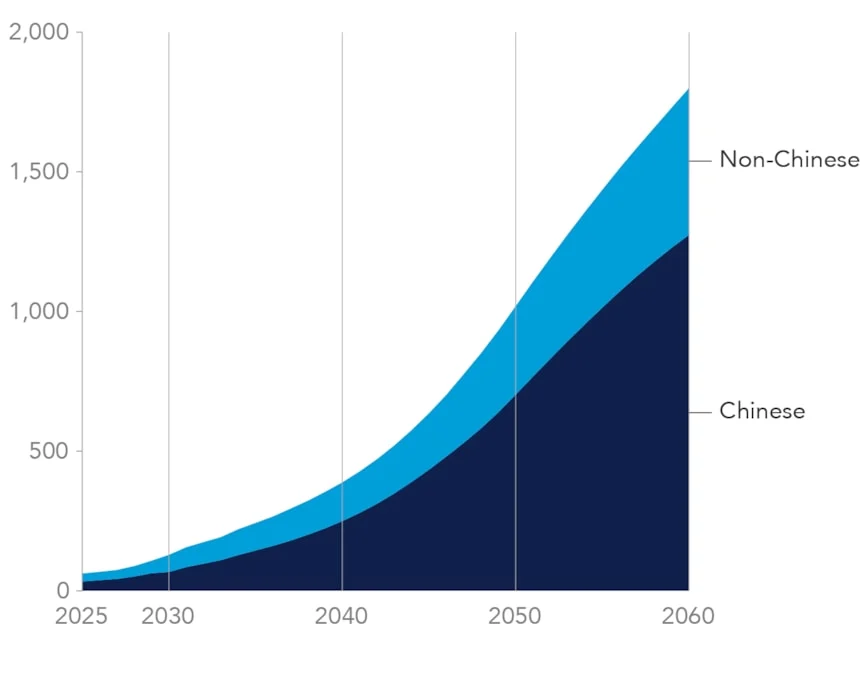
Despite current market difficulties, the long-term opportunity remains significant, with most major energy scenarios continuing to project global hydrogen demand of around 200 million tonnes in coming decades as decarbonisation efforts accelerate.
Source: Adapted from a LinkedIn post by Carlos Bernuy-Lopez