New analysis from Hydate argues that the future of green hydrogen depends heavily on improving electrolyser efficiency, warning that without such gains, production costs are likely to remain too high for widespread commercial competitiveness.
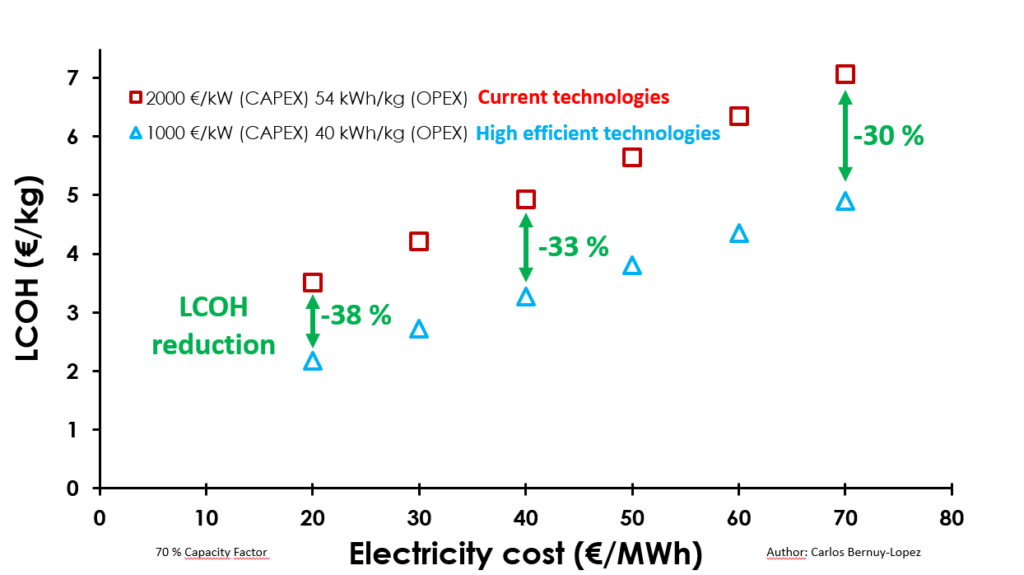
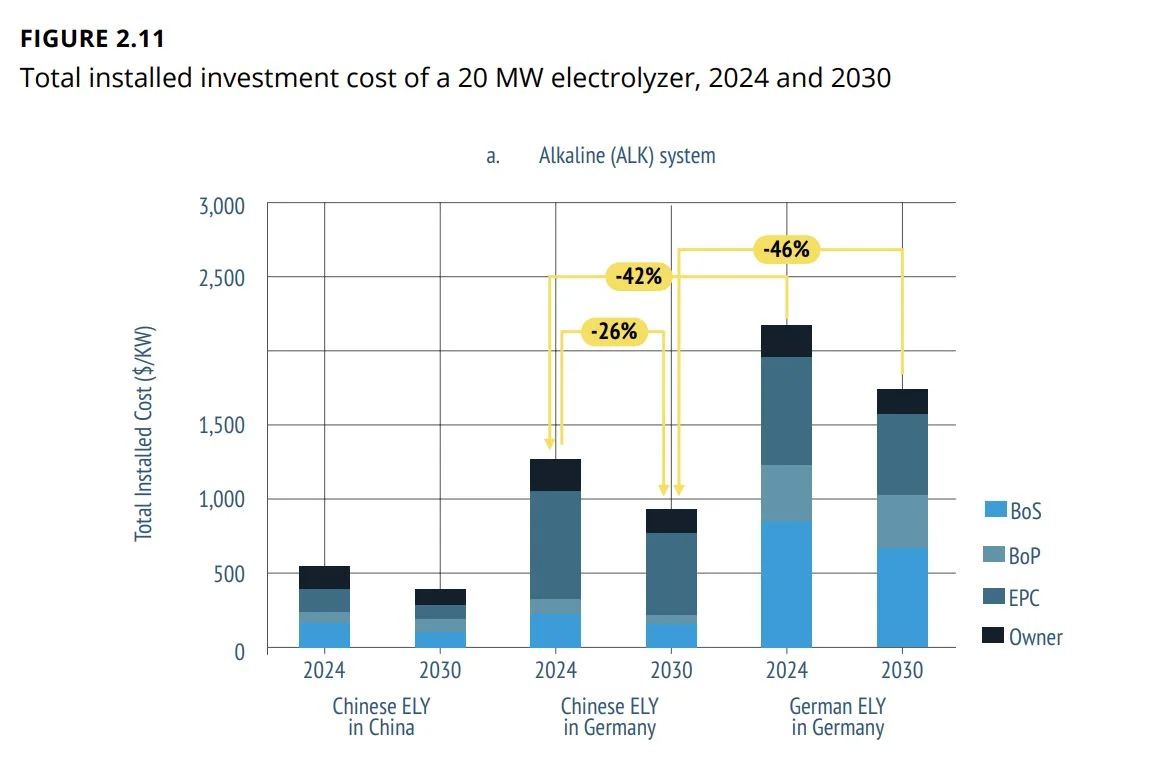
The article stresses that the decisive metric for developers is the Levelised Cost of Hydrogen (LCOH), which reflects both capital costs and, crucially, operating costs — most notably the amount of electricity required to produce each kilogram of hydrogen.
Hydate’s modelling suggests that improvements in electrolyser efficiency could reduce overall production costs by around 38%, largely because more efficient systems need significantly less power per unit of hydrogen produced.
Given that electricity is typically the largest recurring expense in green hydrogen projects, efficiency gains have an outsized impact on competitiveness.
Solid Oxide Electrolysis (SOEC) is highlighted as one of the most promising high-efficiency technologies, though the author notes that low-temperature electrolysers are also improving and may deliver meaningful efficiency gains over time.
The central warning is clear: without greater efficiency, green hydrogen is likely to remain too costly for many industrial applications, making projects harder to finance and slowing large-scale deployment.
We use cookies on our website to give you the most relevant experience by remembering your preferences and repeat visits. By clicking “Accept”, you consent to the use of ALL the cookies.
This website uses cookies to improve your experience while you navigate through the website. Out of these, the cookies that are categorized as necessary are stored on your browser as they are essential for the working of basic functionalities of the website. We also use third-party cookies that help us analyze and understand how you use this website. These cookies will be stored in your browser only with your consent. You also have the option to opt-out of these cookies. But opting out of some of these cookies may affect your browsing experience.
Necessary cookies are absolutely essential for the website to function properly. This category only includes cookies that ensures basic functionalities and security features of the website. These cookies do not store any personal information.
Any cookies that may not be particularly necessary for the website to function and is used specifically to collect user personal data via analytics, ads, other embedded contents are termed as non-necessary cookies. It is mandatory to procure user consent prior to running these cookies on your website.