Hydrogen projects continue to advance across early and mid-stage development, with increasing movement into permitting, demonstration and construction phases.
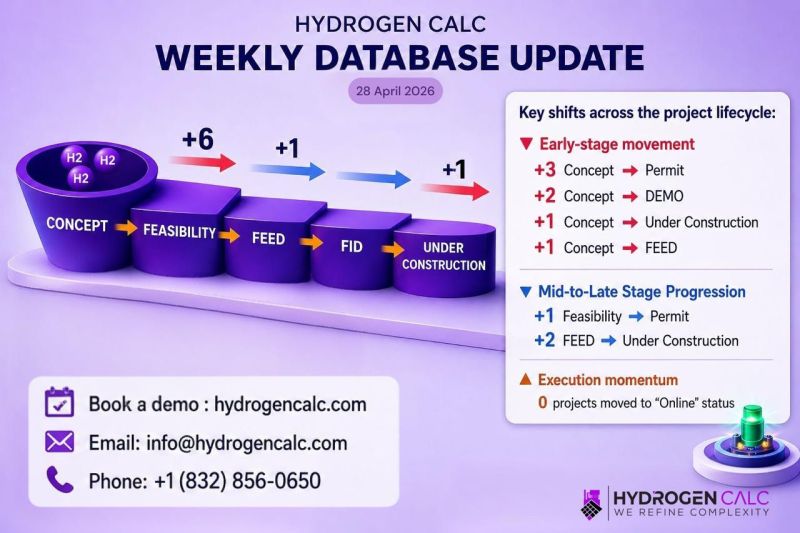
The latest update from HydrogenCalc’s weekly database highlights continued momentum across the hydrogen project pipeline, with 10 tracked changes pointing to steady progression through key development stages.
The data shows a clear concentration of activity at the early end of the pipeline. Several projects have moved out of the concept phase and into more advanced stages, including permitting, demonstration and front-end engineering design (FEED).
This shift suggests that developers are increasingly pushing projects beyond initial announcements and into phases that require greater technical validation and regulatory engagement.
At the same time, a number of projects have progressed into the construction phase, indicating gradual but tangible execution momentum. While the number of projects reaching construction remains relatively limited, these transitions are significant as they represent a move from planning to physical deployment.
Mid-stage progression also remains active, with projects advancing from feasibility into permitting and from FEED into construction. These transitions are critical indicators of project viability, reflecting both improved project maturity and the ability to secure the necessary approvals and financing to move forward.
Taken together, the latest movements suggest a hydrogen market that continues to evolve beyond early-stage hype. While much of the activity remains concentrated in concept and development phases, the steady flow of projects into permitting, demonstration and construction highlights a pipeline that is gradually consolidating around more credible and technically validated opportunities.
Tracking these stage transitions provides a clearer picture of where real progress is occurring, as opposed to headline project announcements.
As the sector matures, this type of data-driven insight is becoming increasingly important for understanding how the hydrogen project pipeline is translating into actual execution.
Source: HydrogenCalc